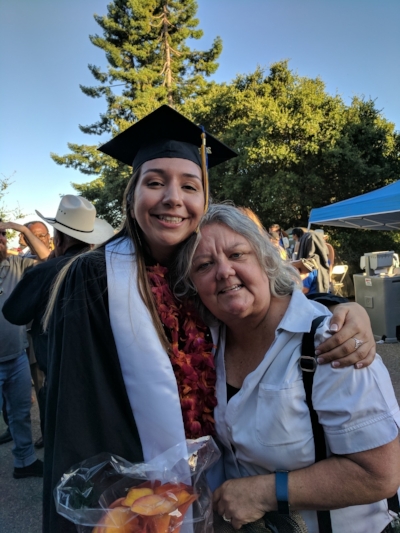
Sonya Williams - Volunteer of the Month - May 2018

 
Sonya Williams.jpg


Please join us in congratulating Sonya Williams - Words Alive Volunteer of the Month for May 2018!

Sonya has been with our volunteer family since December.  She has already made such an impact on her Adolescent Book Group students and teachers at South Bay Blended Tech in National City. Sonya’s charisma is unparalleled, which makes her a dynamic facilitator. She has a knack for commanding attention from her group of raucous teens while keeping the session fun and engaging. She makes it a point to provide one on one attention, connecting with individual students throughout each creative writing session.

Sonya has also contributed to the program by writing curriculum guides.  And, she has started to help facilitate volunteer orientations – sharing her classroom experiences and tips with new volunteers. 

Her support is well-rounded and given with such positivity and energy.  Sonya, we are so lucky to work with you!  Thanks for giving us your time.

Check out the Volunteer of the Month Interview with Sonya below:

Tell us a little about yourself.
I have always loved reading. As a young child, I was always sneaking off to read a book (and I still do). My love of reading took me to England for my master’s degree in English Literature, inspired me to start several book clubs, teach college, ESL and literacy classes, run an educational center, write curriculum, and develop training programs and e-learning courses. These days, I also spend a lot of time reading Mo Willems books with my kids.

What is the most rewarding part of your volunteer role(s)?
I initially got involved with Words Alive to develop curriculum, but was convinced to teach an ABG writing class, and I’m glad I did. It’s so rewarding to develop real connections with individual students, and to see a powerful, personal piece of writing come from a student who doesn’t speak in class. And it’s inspiring to work with the classroom teachers who invest their lives in these students.

What have you been reading lately?
I’m currently reading Sing, Unburied, Sing by Jesmyn Ward.

Celebrating Our Graduating Scholars: Domminiece Willis!

"Words Alive has been such a huge stepping stone into both my transition into college and adulthood. I have picked up on so many educational, social and life skills throughout my time with Words Alive." -- Domminiece Willis, Words Alive Westreich Scholar

An image of Domminiece at her graduation. She's holding her Southwestern College degree up to the camera and smiling, and she's wearing a Words Alive Westreich Scholar stole!

An image of Domminiece at her graduation. She's holding her Southwestern College degree up to the camera and smiling, and she's wearing a Words Alive Westreich Scholar stole!

The Words Alive Westreich Scholarship Program awards scholarships to participants in the Words Alive Adolescent Book Group to support them in their pursuit of higher education at the college or vocational level. Unlike other scholarship programs, which typically fund only tuition, books and educational supplies, each recipient is eligible to receive funds to cover the cost of rent, food, childcare, clothing, travel and other living expenses. Additionally, the program matches each recipient with a mentor. Student and mentor meet regularly throughout the school year, and the mentors provide guidance, direction, and often, a shoulder to lean on.

In the past month, we have seen three of our scholarship students, Domminiece Willis, Zaphire Alonso Duarte, and Lexi Martinez, graduate from community college with associate's degrees. All three students graduated on May 25, 2018, Domminiece from Southwestern College and Zaphire and Lexi from City College.

Words Alive is thrilled to have been a part of the journey towards success for all of these wonderful students. We are so proud of all of them; they embody what it means to persevere and thrive.

We interviewed Domminiece Willis to learn more about her college experience and her experience with the Words Alive Westreich Scholarship Program.

Read on:

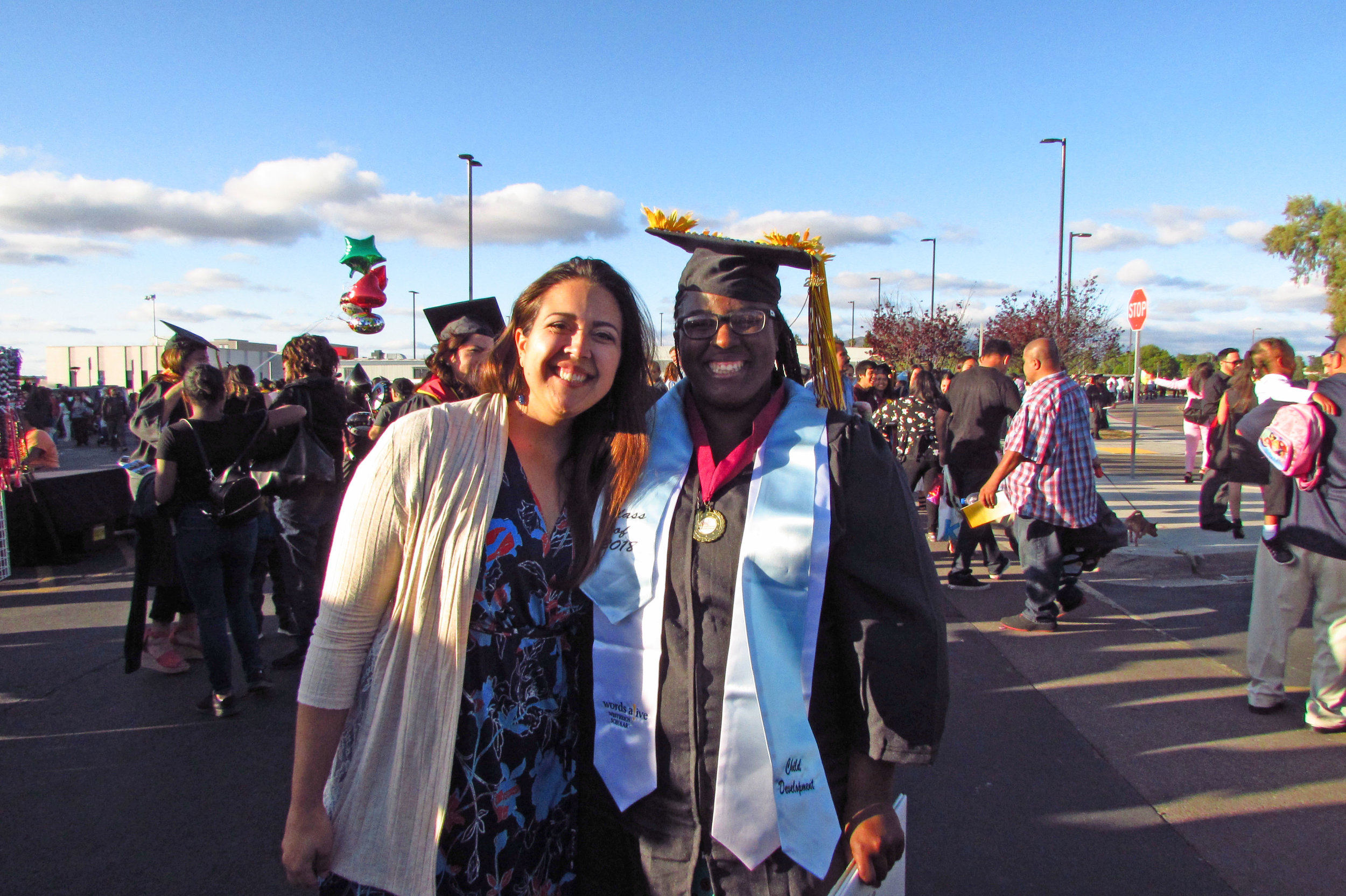
An image of Jessica Fryman, Teen Services Program Manager, and Domminice Willis at the graduation!

An image of Jessica Fryman, Teen Services Program Manager, and Domminice Willis at the graduation!

Name: Domminiece Willis

Age: 26

College: Southwestern College

Degree (with area of study): Associates in Art: Child Development

Mentor: Karen Ladner


1. When were you first introduced to Words Alive? How has your experience with Words Alive affected you?

I was first introduced to Words Alive through the monthly book groups held at Monarch School in 2010. Words Alive has been such a huge stepping stone into both my transition into college and adulthood. I have picked up on so many educational, social and life skills throughout my time with Words Alive.

2. What was the biggest challenge you faced in earning your degree?
The biggest challenge that I faced in earning my degree was struggling with self-doubt, overwhelming course loads and comparing my progress with others. I found myself constantly belittling myself or disregarding any minor achievements or progress that I had made because in my point of view I was ”behind” everyone else and that began to take a toll heavily on my grades and my motivation to finish college.

3. How did you overcome that challenge?
With the help of my family, mentor, and another Words Alive staff member, I dropped my course load in half. I took a break from the scholarship and I focused more on celebrating my achievements, big or small, and understanding that my educational journey is not like everyone else’s and that I will move at my own pace and in my own way, but I will make it to the finish line. Regardless.

4. What is your favorite book that you read during your college years? Why?
The Glass Castle by Jeannette Walls. I remember reading this book and having to pause saying, “This is ME, this book is about me.” There were so many similarities between me and the characters of this book. The struggles of stability, financial issues, schooling and self-discovery throughout this book spoke to me and gave me such a positive outlook on life because it was so refreshing to see how everything worked out for her in the end.

5. What are your future plans now that you have earned your associate degree?
Now that I have my associate degree in Child Development it's off to San Diego State University in the fall to earn my bachelor’s in child development, so I can become a Child Life Specialist. Can't stop now! The future children depend on me!

6. What advice do you have for the next generation?

Keep going, stay positive and always surround yourself with a strong support system! It's going to be hard and you'll come across many obstacles in your life. You'll get a few bruises here and there and it's okay to sit and cry over them as long as you get up to grab a band-aid and push through.

Learn more about our Teen Services program here: http://www.wordsalive.org/teenservices/

Get Caught Reading!

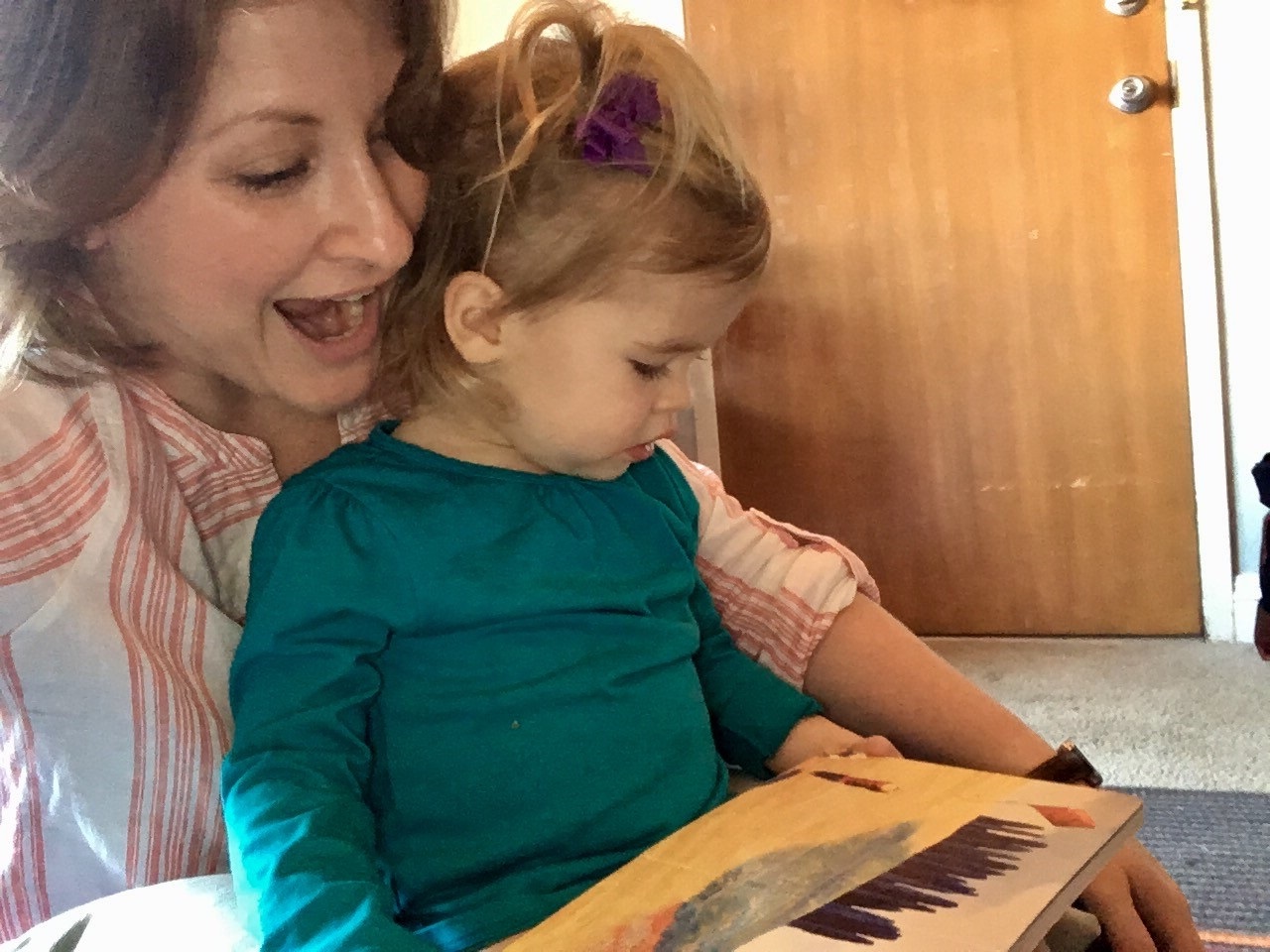
A picture of our Program Director, Amanda Birmingham Bonds, getting caught reading with her daughter!

A picture of our Program Director, Amanda Birmingham Bonds, getting caught reading with her daughter!

May is National Get Caught Reading Month, a campaign that aims to encourage people of all ages to enjoy literature and share their love of it with others. The campaign gets the word out by showing photos of celebrities reading various books, including Queen Latifah, Michael Bloomberg, and Dora the Explorer, among several other familiar faces. These photos are printed into poster format and dispersed in schools and libraries to help children realize that books aren’t just schoolwork, but successful people from all ages and backgrounds read with a smile on their face. To help spread the message, teachers and librarians then take photos of students “getting caught” reading and make their own posters to encourage others!

Why is this Campaign Important?

In a world focused on the internet and social media, books seem to have taken a back seat in people’s everyday life, giving way to more instant forms of gratification. For young children and teens particularly, it is important that they learn to read and enjoy the experiences reading can bring. Reading for pleasure has many benefits including mental wellness and, according to an article from the New Zealand National Library, reading is also associated with higher academic motivation levels, more positive engagement in school and family relationships, and higher social/attitudinal competencies. Aside from those benefits, reading is a key skill one must have to pursue a higher education and to succeed at many 21st century careers.

In a study done for Scholastic Publishers, researchers found that less than 50% of children ages 9-17 read for enjoyment. At a time when a child can build a habit for a lifetime, this number is alarmingly low and seems to correlate with the low amount of adults that read for pleasure as well. In the same study, Scholastic found that a child between the ages of 6 and 11 is more likely to be a frequent reader if they are currently read to at home, they were read to 5-7 days a week before nursery age, and if they were less likely to use a computer as fun. The common theme to encouraging a healthy relationship with books is reading aloud with children and being a good role model for them by consistently bringing books into the home as a family activity.

Words Alive’s Take On The Celebration

A #shelfie from the lovely folks at the San Diego County Office of Education!

A #shelfie from the lovely folks at the San Diego County Office of Education!

Words Alive has gotten involved in celebrating people’s love of reading by bringing the idea to social media and asking others to post a #shelfie with their favorite book or in front of their book collections! We have also been inviting local council members, news anchors, and even local sports team representatives to make appearances in classrooms to read to elementary students to help encourage their love for reading. To get involved with our Share Your Love of Reading Campaign, follow our Facebook, Twitter, and Instagram @WordsAliveSD or visit our main page to learn more about other ways you can get involved!

Sources:

http://www.getcaughtreading.org/

http://everychildareader.net/

https://natlib.govt.nz/schools/reading-engagement/understanding-reading-engagement/reading-for-pleasure-a-door-to-success

https://www.theguardian.com/books/2015/jan/09/decline-children-reading-pleasure-survey

Board Spotlight: Orville Brown!

An image of Board Member Orville Brown standing in front of a bookshelf. The image has the following quote from Orville: "As a child growing up in the British Caribbean, it was instilled in me and my siblings  that reading and communication wer…

An image of Board Member Orville Brown standing in front of a bookshelf. The image has the following quote from Orville: "As a child growing up in the British Caribbean, it was instilled in me and my siblings  that reading and communication were critical in our development. We spoke the dialect “Patios” at home but in school we were taught English. We were rewarded when we able to spell a word or read a book.

Orville Brown is one of our Board Member who came to us through our merger with Rolling Readers. He is a Senior Research Scientist at Ferro Corporation, and he has 14 patents in the microelectronic field. He received his undergraduate degree in Mathematics and Chemistry from Hunter College of the City of University of NY and his graduate degree in Chemistry from Columbia University. He is also involved in Habitat for Humanity Global Village.

We are so happy to have Orville on our Board! Now, let's hear from him!

What was your relationship with literacy as a child?

As a child growing up in the British Caribbean, it was instilled in me and my siblings  that reading and communication were critical in our development. We spoke the dialect “Patios” at home but in school we were taught English. Reading, writing, spelling/ pronunciation were separate courses which were taught from kindergarten through third grade. We were rewarded when we able to spell a word or read a book.

When was the first moment you fell in love with reading?

I actually fell in love with reading when I was about 7 years old. I was in a school play and I had to remember my lines of a poem by Robert Louis Stevenson – “The Moon”.

How do you use literacy in your day-to-day life?

The “everyday routine” such as traveling, communicating (such as sending an email or a text) or reading the news or a technical journal requires some degree of literacy.

What impact would being illiterate have on your life? Would you have the same profession if you couldn’t read?

Without being literate I could not be in my field. First it requires being literate to complete one’s degree and then as researcher, I have to be able read and write reports, technical journals, patents, standard operating procedures, solve technical problems/challenges and all the other requirements that come with my career. I would not have the same career—I would not be hired.

What is your favorite book and why?

My favorite book is Alice Walker’s, “The Third Life Of Grange Copeland.” The story encompasses love, determination (never give up), hope, and redemption.

What was your favorite book as a child and why?

There was a book series that I was addicted to as a child. The Hardy Boys Series by ghost writer Franklin Dixon (Stratemeyer Syndicate). Joe and Frank Hardy's mystery solving skills kept me up late under the covers as an 8-year-old kid.

My favorite single book was “Huckleberry Finn” by Mark Twain. This book introduced me to a different America than I envisioned it to be growing up in Jamaica. The ordeals, the trails, his relationship with Jim and the excitement of Huck Finn’s journey down the Mississippi got me hooked.

Do you have a favorite memory relating to reading?

Yes—As a 5th grader in a small class in New York we were each given a paragraph of Joseph Conrad’s, “Heart of Darkness” to read aloud. When it came to my turn, I was stuck, I completely went blank for about a minute. It felt like eternity. I was able to pull myself out, recover, and read my paragraph. But, I still remember that feeling!

What made you join the Words Alive board?

I grew up in a home where volunteering and giving back to the less fortunate was a requirement for all. I attended a Rolling Reader’s function and got hooked and wanted to be a part of its mission. In addition my kids were avid readers and are successful in their careers because of that. I wanted others to have the opportunity that I had and my children had because of that childhood reading experience.

What has been your favorite aspect of being a Words Alive board member?

Seeing the positive results of Words Alive's efforts.

How We Served 75 Families By Partnering With a Kombucha Brewery!

By Jennifer Van Pelt

Image of several people toasting with glasses of Boochcraft kombucha. Source: Boochcraft

Image of several people toasting with glasses of Boochcraft kombucha. Source: Boochcraft

Boochcraft is a San Diego based kombucha brewery that focuses on not only brewing kombucha but also giving back to the community by facilitating various projects that support initiatives such as Education, Food, and Energy. In April, Words Alive partnered up with Boochcraft to celebrate their new Special Release flavor (Carrot Vanilla Pear!). We celebrated this partnership with Boochcraft at an event for their 2nd Anniversary, hosted at local venue Moniker General. All gross proceeds from this Special Release were donated to Words Alive!

Results of the Partnership

The gross proceeds from the Boochcraft Special Release ultimately totaled over $11,000! These funds were directed towards Words Alive’s Family Literacy Program, which focuses on empowering parents with the confidence and tools they need to bring reading to the forefront of their young children’s lives and make it a habit in the home. With the money donated, we were able to serve over 75 families in underserved San Diego neighborhoods with 7- week parent/child workshops. The participating families receive a brand new book each week to add to their home library and at the end of the program each preschooler receives a kindergarten readiness backpack full of school supplies and additional books.

More About our Family Literacy Program

An image of a parent and child working together on an activity in one of our Family Literacy sessions.

An image of a parent and child working together on an activity in one of our Family Literacy sessions.

Over a course of seven weeks, our program provides 10 hours of skill-building exercises for parents, group story time for the preschoolers, as well as guided activities for both. These activities are all organized to benefit families from high-need communities who don’t have the resources available to promote positive reading habits in the home. The results from our 2017 Family Literacy Program showed that 82% more families than before the program reported having a routine for looking at books together at home! These routines focused around books and pre-literacy skills are paramount for achieving literacy success in the child’s education for years to come.

Partnerships such as this one allow us to reach more families and make a bigger impact than either organization could have done individually. We are so thankful to Boochcraft for supporting us and are looking forward to continuing to make a difference in our community together!

You can still find the Special Release Flavor in the following locations:

San Diego & Nearby: Pizza Port Solana Beach, Trilogy Santuary, Encontr, Common Theory, Nate’s Garden Cafe, Bottlecraft Liberty Station, Raglan, The Joint, Barrel Republic Carlsbad, Whole Foods, Palm Desert

Santa Barbara: Lama Dog Tap Room & Bottle Shop, Elsie’s Tavern, Whole Foods Market

Ventura: Two Trees Cafe, Barrelhouse 10, Bottle & Pint Oxnard

Riverside: Dead or Alive, Whole Foods Market, La Quinta Brewing

Orange County: Whole Foods Market, Beach Hut Deli

Butte:The Chico Tap Room, Winchester Goose, The Lost Dutchman Tap Room, Burgers & Brew Chico

Sources:

https://boochcraft.com/impact/

https://static1.squarespace.com/static/56663dee841abafca76d6f46/t/59dd01aa6f4ca3f5bfd80db2/1507656125529/Annual+Report+2017+_++Web+and+email.pdf

Save the Date For Our Annual Art & Literacy Event!

At Words Alive, our goal is to help the students in our programs make connections between books and themselves, others, and the world. By learning that books have implications beyond being "just another school assignment", we hope to help students and families fall in love with reading and become life-long learners.

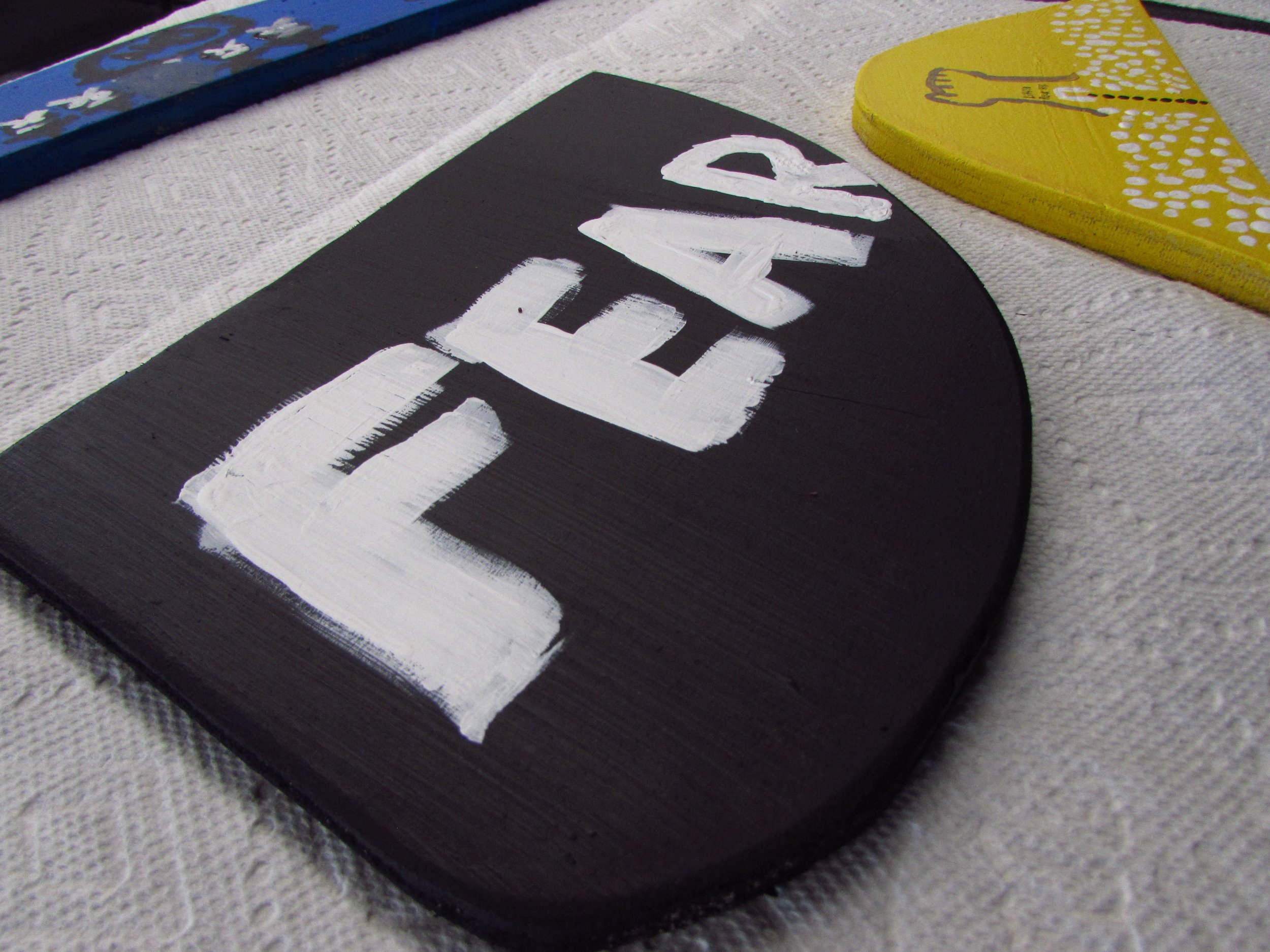
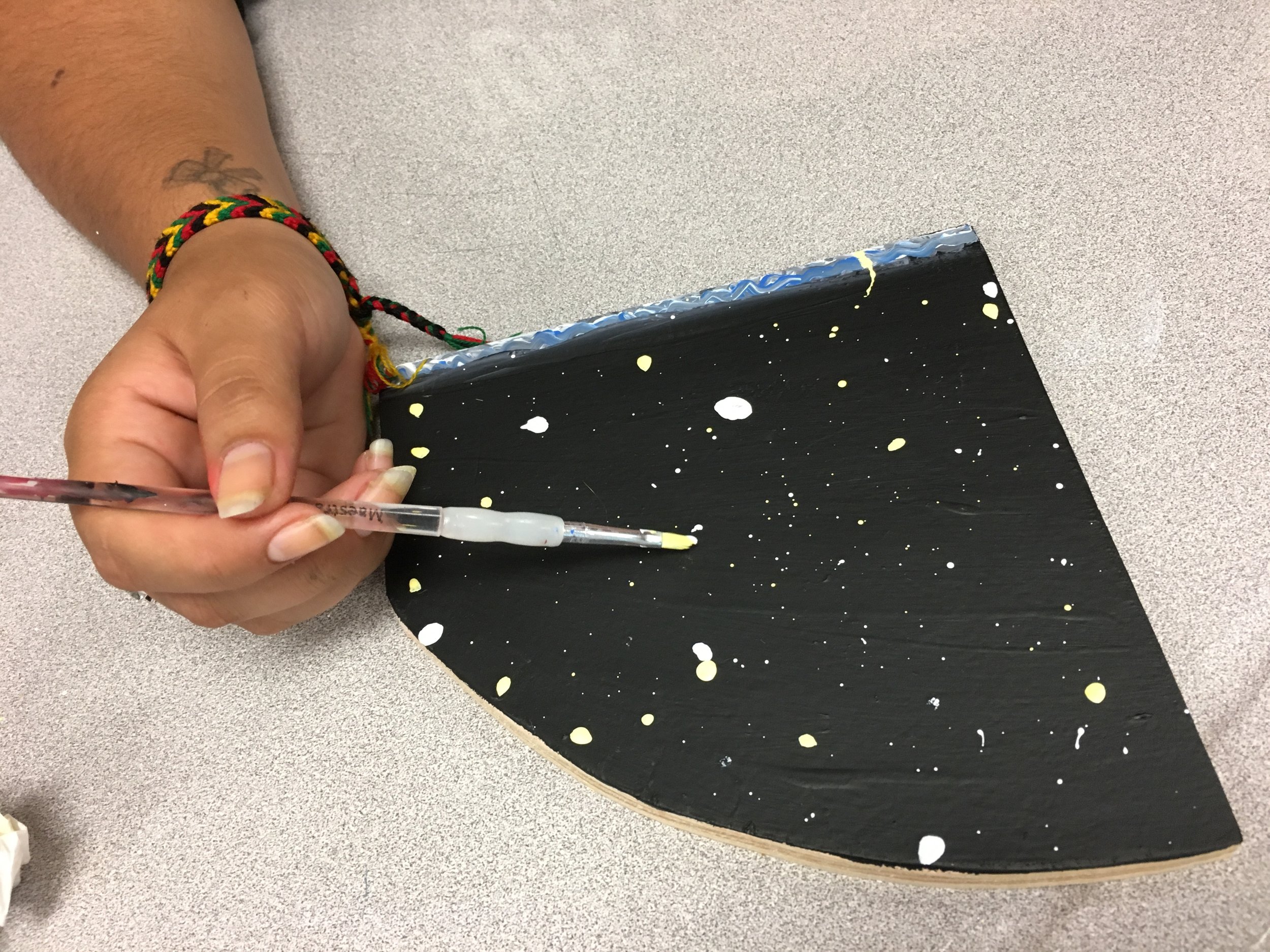
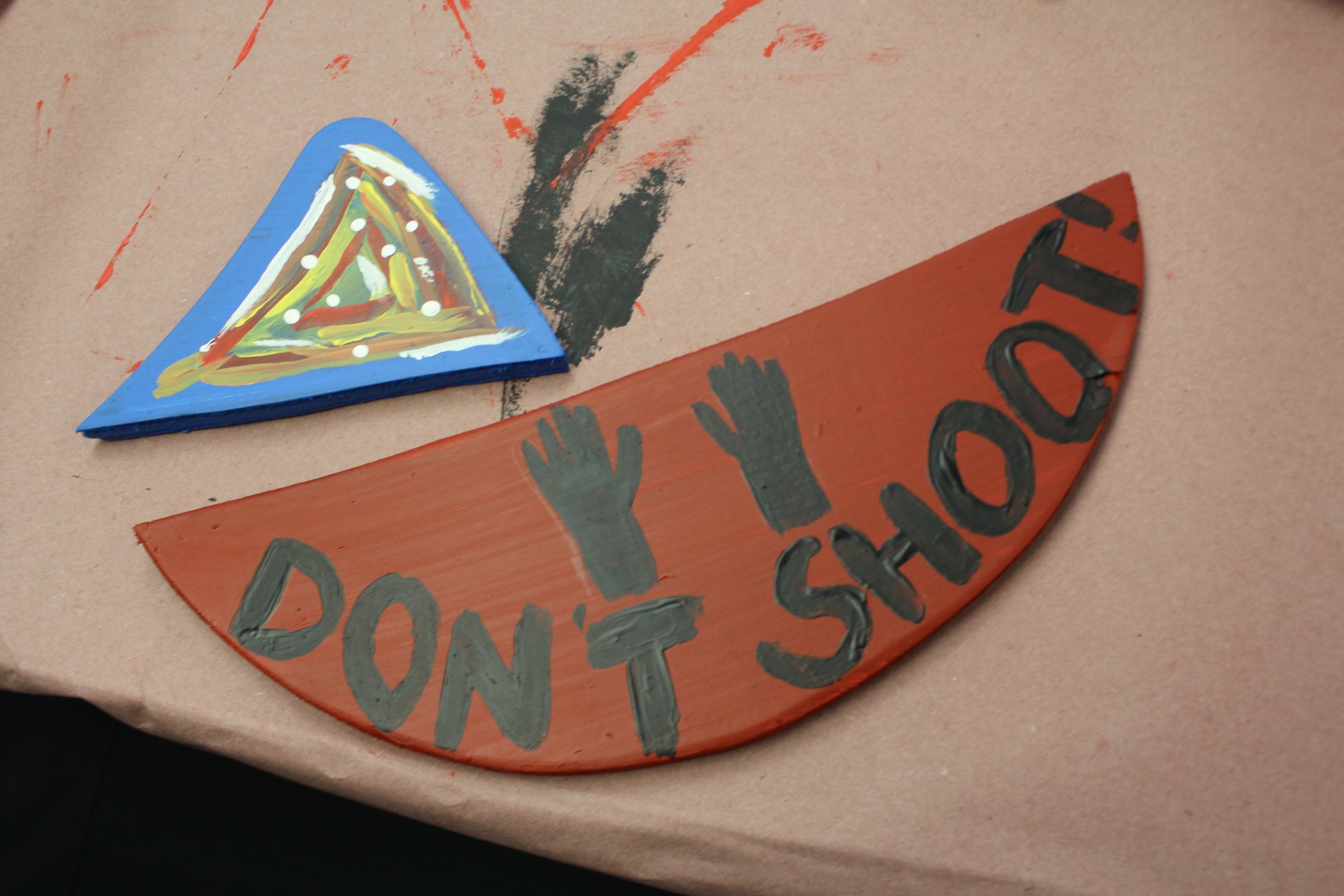
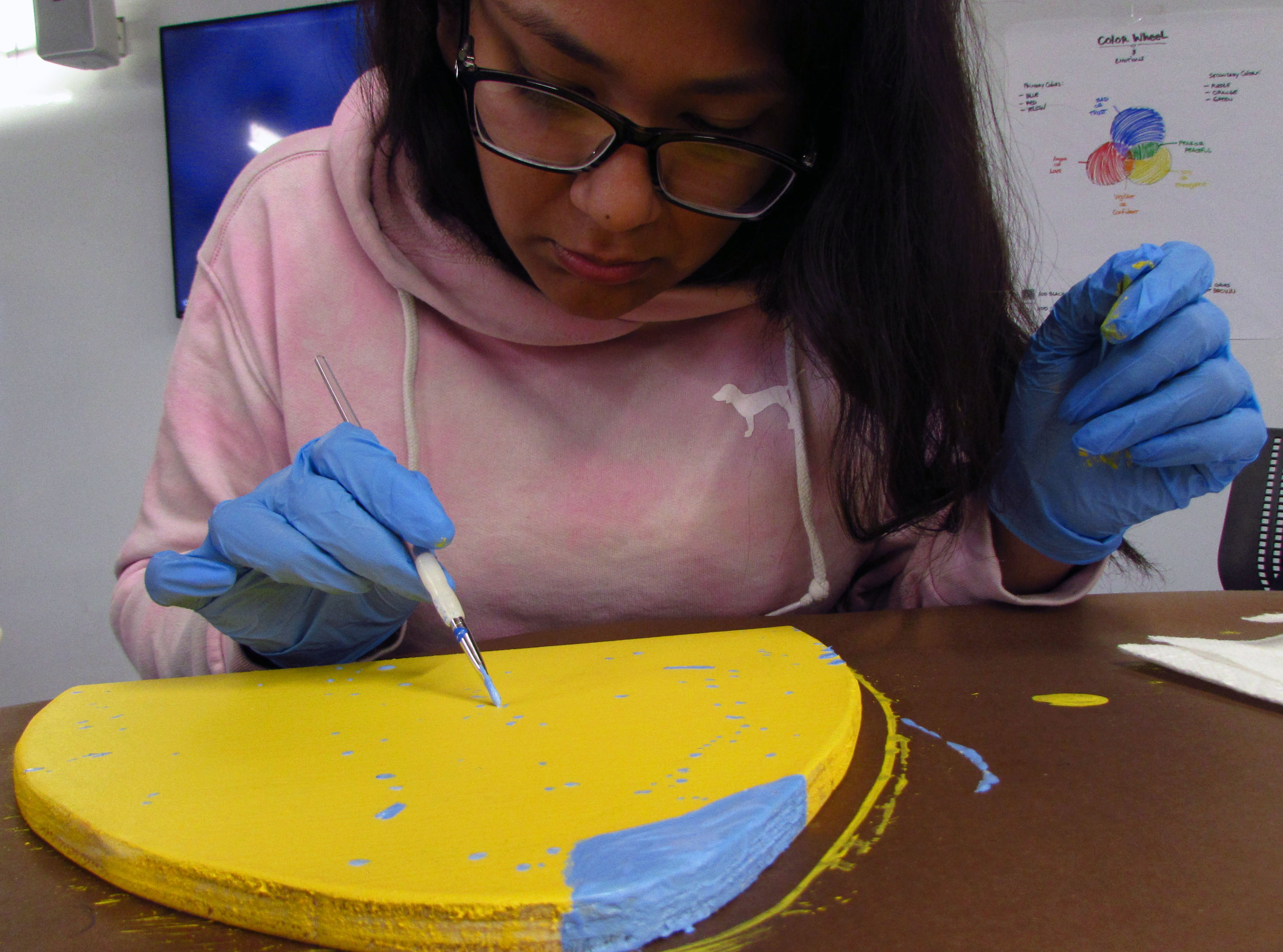
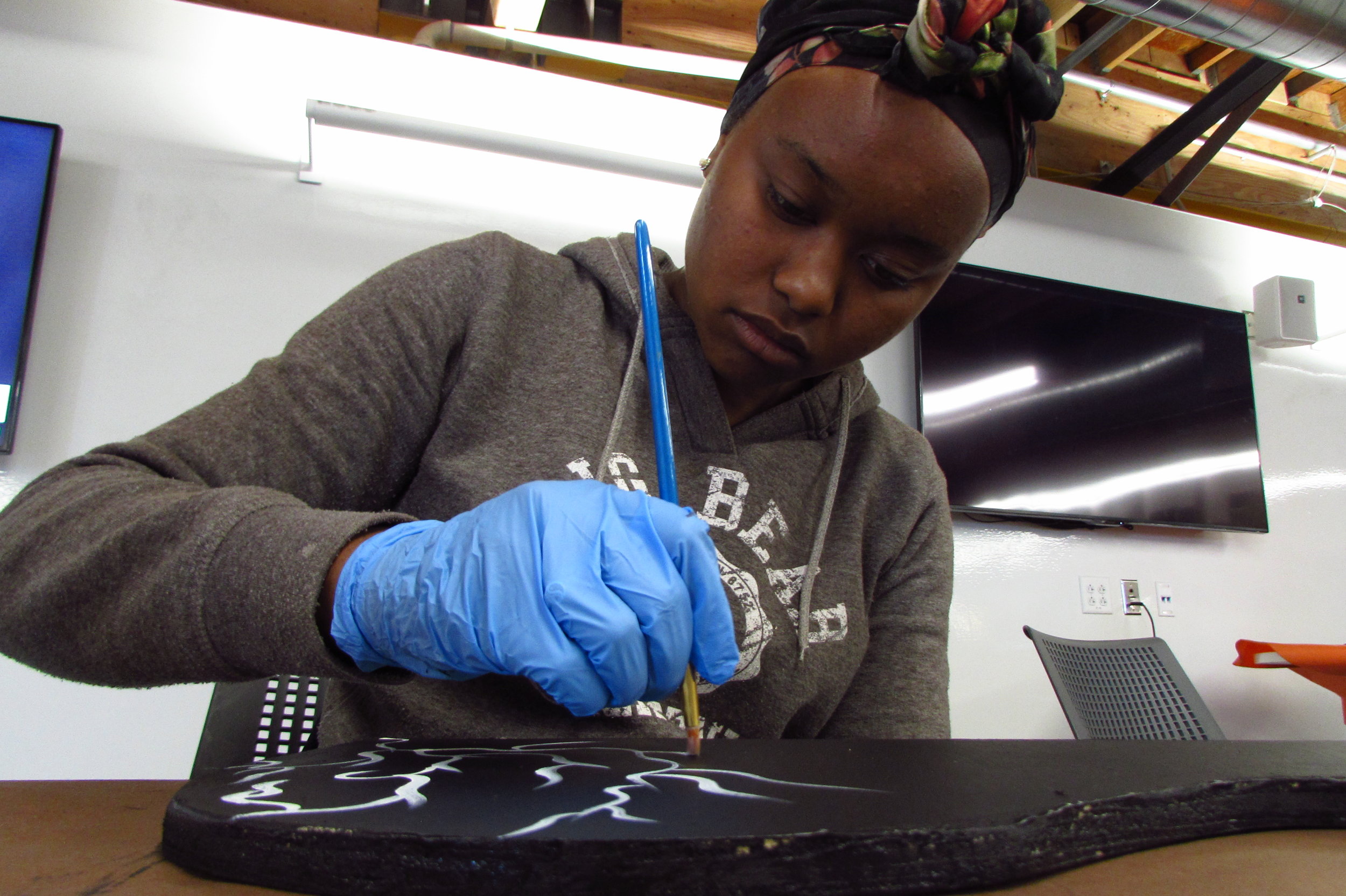
One way we accomplish this is through the Arts Component of our Adolescent Book Group (ABG). Each year, ABG students participate in a program-wide literacy and arts project that enhances the reading experience and encourages students to think critically about themes in the book and their own environment.

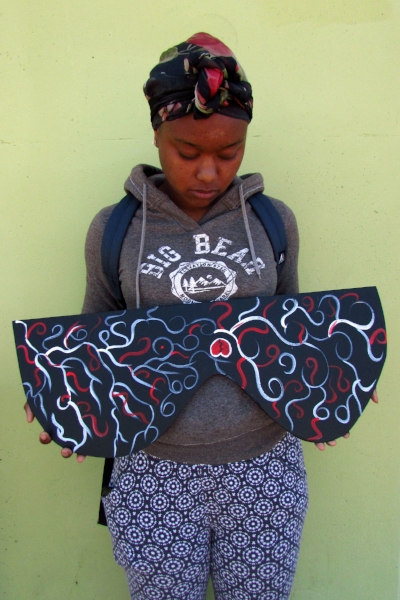
An image of a student from Monarch holding her piece of the communal sculpture. Her piece was based around the theme, "grief."

An image of a student from Monarch holding her piece of the communal sculpture. Her piece was based around the theme, "grief."

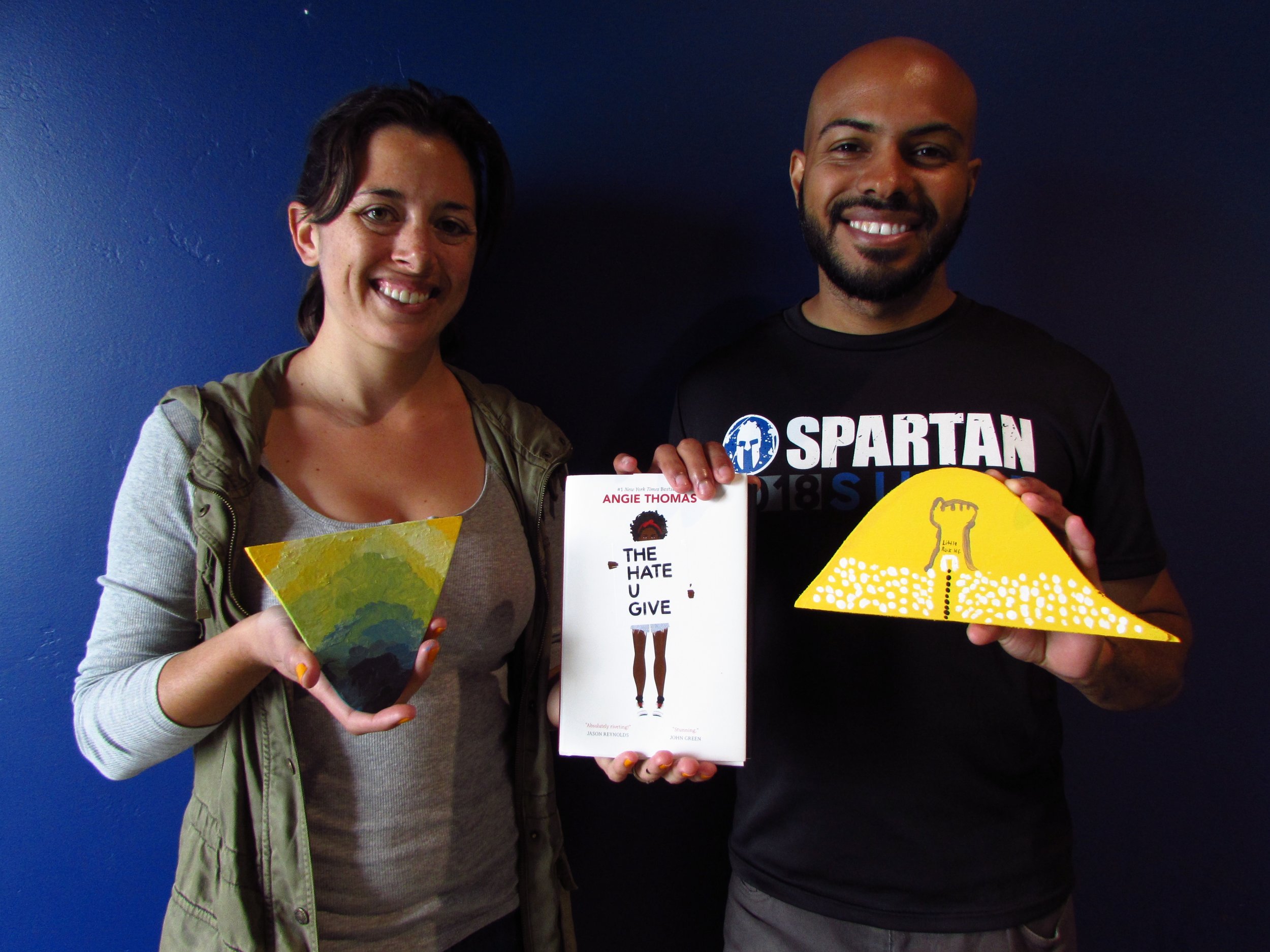
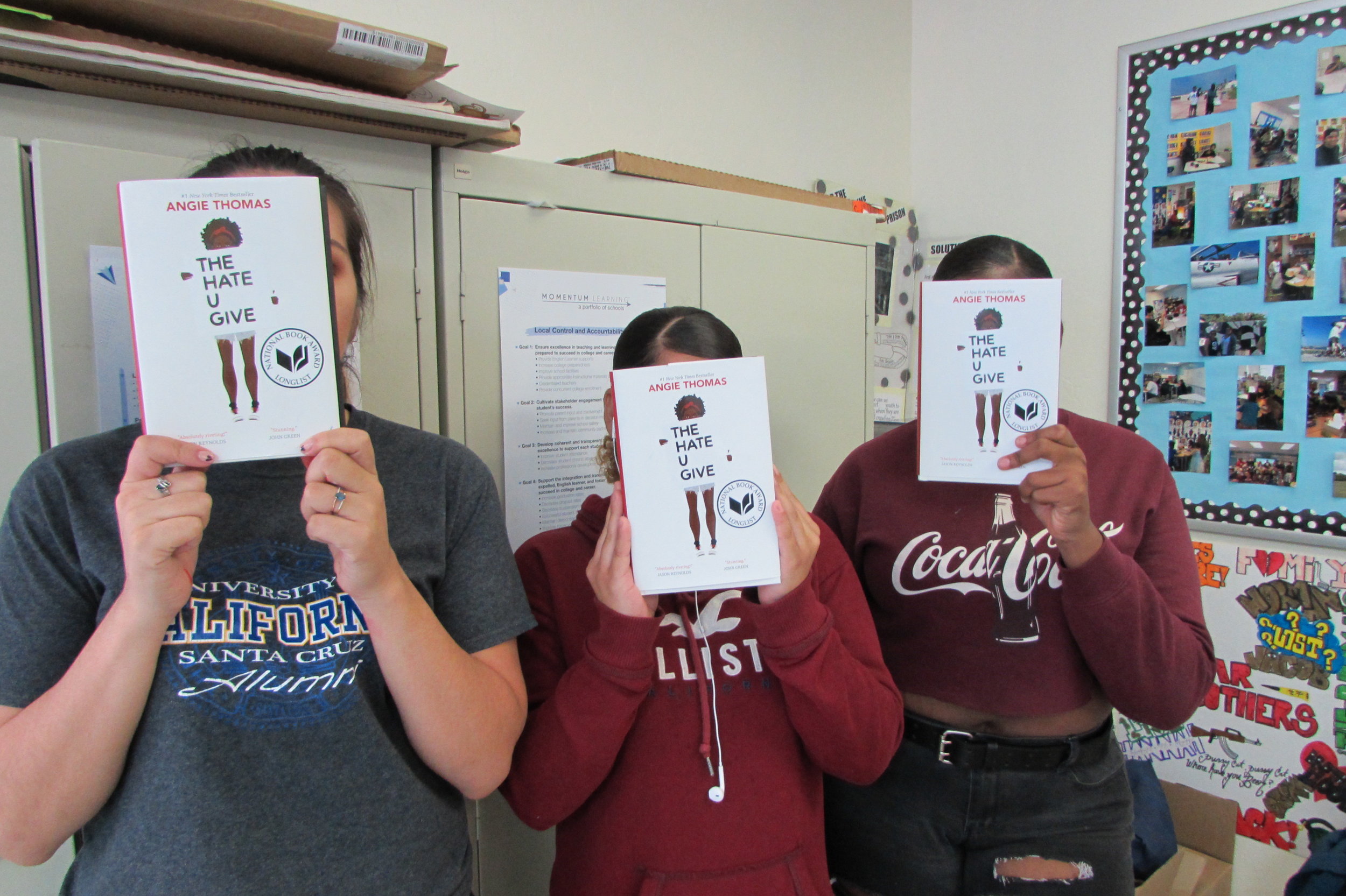
This year’s project, called "The Love You Give," is a response to Angie Thomas' #1 bestselling novel The Hate U Give. The project creatively weaves the book’s message and themes into a communal wood sculpture designed by artist Isaias Crow, facilitated by Words Alive volunteers and produced by students who attend Juvenile Court and Community Schools.

If you're an avid reader of our blog, you'll know that we recently published a piece about the connection between art and literacy. A study was done on students who participated in the “Learning Through the Arts” (LTA) Program at the Guggenheim Museum. Over 200 students and teachers participated in the program and were later tested and interviewed to monitor their progress. A few notable outcomes came about from this program, as noted by ArtsEdSearch:

  • There were increases in critical thinking and literacy skills among students who participated in the LTA Program.

  • LTA students provided interview responses using language associated with higher grade levels and with more words than those who did not go through the program.

All of this explains why we continue to coordinate this project year after year. This study, and others before it, supports the idea that art education teaches more than just art: it helps to expand critical thinking and language development. We know first hand how meaningful this project is to our students, and how beneficial it is to some of them to approach learning in a different way.

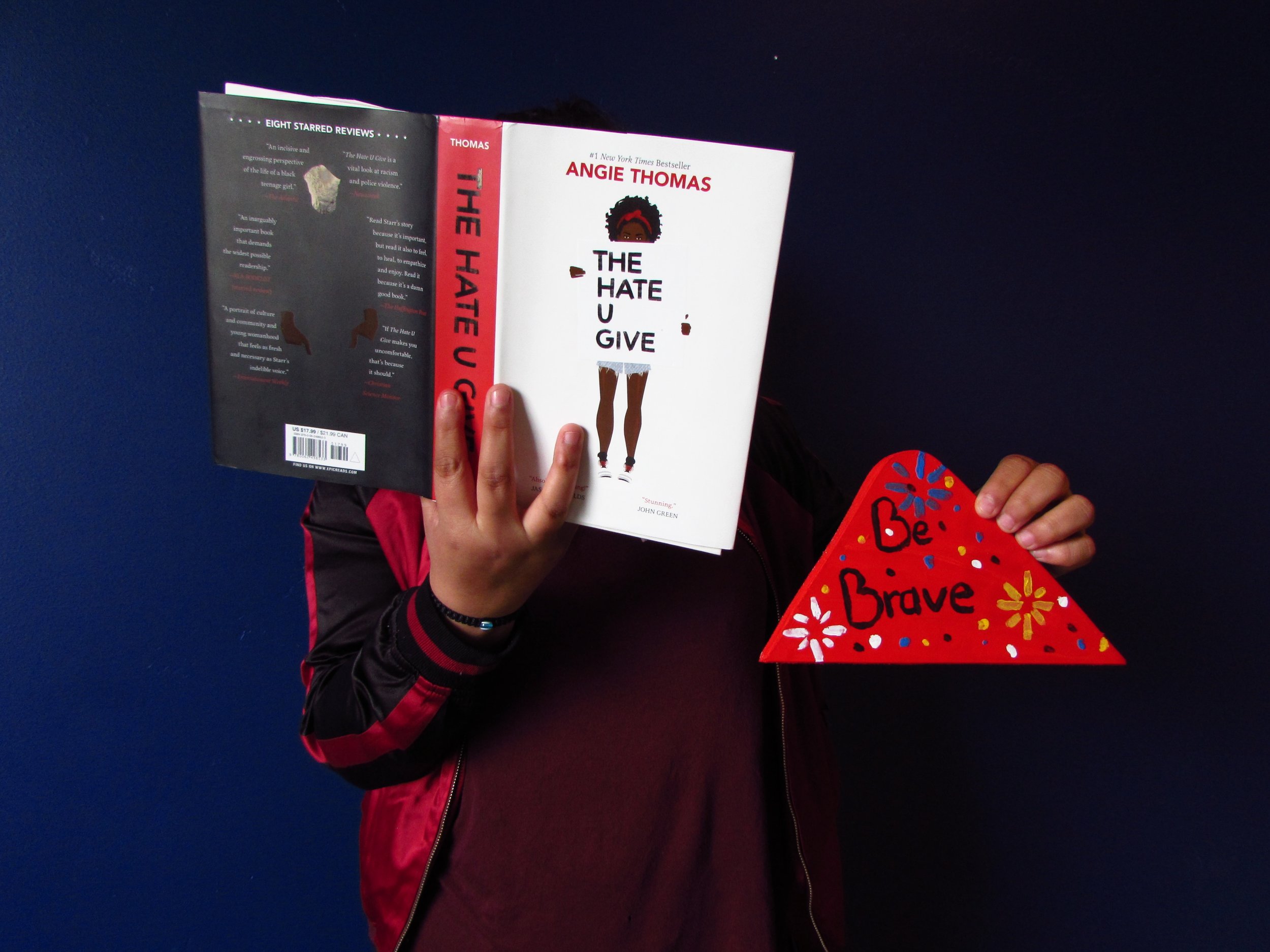
An image of a student from 37ECB holding his piece of the communal sculpture. His piece was based around the theme, "bravery."

An image of a student from 37ECB holding his piece of the communal sculpture. His piece was based around the theme, "bravery."

One of our ABG volunteers, Allison Keltner, had the following to say about facilitating this year's project at 37ECB:

After nearly a full semester working with the students at 37ECB, I looked forward to the Arts Component project for The Hate U Give. Each week, we saw a range of participation levels and interest from the students—from those who would barely utter a word to those who gladly took charge of the discussion—and I expected (hoped!) that most would be into the art project.

I wondered, week to week, what the students were really getting out of the discussions we were leading. Some that would be really into it one week wouldn’t speak up the next; others seemed constantly distracted. But in every session, I was always impressed at least once by someone’s insight or reaction to the book. What I enjoyed most about the Arts Component was seeing something from every student. I was thrilled to see their artwork and hear how each related their piece to the theme of bravery.

I had a hunch that at least a couple kids would thoroughly enjoy getting to express themselves in a different way. And surprise, surprise: once we set up the paints, two of the quietest students immediately picked a spot together away from the rest of the group and settled down to work. They were so intent, and took such care and thought in perfecting their pieces, that we had to give them extra time the following week to finish painting.

Jessica Fryman, our Teen Services Program Manager, had the following to say about this year's project:

“The arts project really brings the book alive for the kids. It’s really special to see students connect to what they’re reading and be able to express themselves.”

A reception will be held from 6 to 8 p.m. Friday, June 8 at San Diego Art Institute, 1439 El Prado in San Diego. You won't want to miss the chance to see these inspiring pieces! The San Diego Art Institute is also hosting a community art day, which will showcase the exhibit and artwork from other Title 1 schools from 11 a.m. to 4 p.m. Saturday, June 9.

We hope to see you there to celebrate art and literacy with us! 

Can Reading Help Improve Mental Health?

By Jennifer Van Pelt

What is Mental Health and Who Can it Affect?

An infographic that says: "Fact: 1 in 5 children ages 13-18 have, or will have a serious mental illness. Source: National Alliance on Mental Illness

An infographic that says: "Fact: 1 in 5 children ages 13-18 have, or will have a serious mental illness. Source: National Alliance on Mental Illness

There are countless benefits to reading, and as May is Mental Health Awareness Month, we are focusing on the intersection of the two and are discussing how reading can be connected to an improvement in mental health. Mental health refers to a person’s condition with regard to their psychological and emotional well-being. According to MentalHealth.Gov, 1 in 5 adults in the U.S. experiences mental health issues.  Mental health can affect how we think, feel, and act and can be influenced by biological factors or life experiences. Though there are many ways to improve your mental health, reading is a free method that can improve not only your mental wellness but your overall quality of life.

How Can Reading Impact Mental Health?

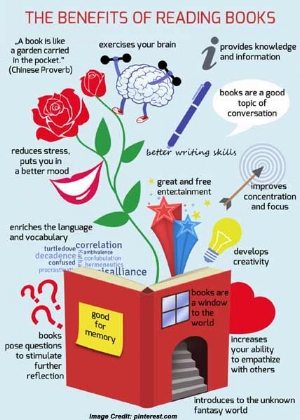
An infographic that explains the many different benefits of reading books, including: "reduces stress, exercises your brain, and increases your ability to empathize with others."

An infographic that explains the many different benefits of reading books, including: "reduces stress, exercises your brain, and increases your ability to empathize with others."

n a study conducted by the Reading Agency and summarized by the Independent, reading for pleasure can increase self-esteem, reduce symptoms of depression, help build better relationships with others, and reduce anxiety and stress. When immersing yourself in a good book, you can be swept away to a world that is separate from yours, thus separating yourself from the dilemmas or stresses you may have. Certain books can also help you realize you are not in alone in what you are going through, which is often times a focus for the healing process: recognizing others are going through what you are.

In a term that was coined in the early 20th century but has roots dating back to Ancient Greece, Bibliotherapy is a form of therapy that recognizes that books have the power to aid people in solving the issues they’re facing. As mentioned on GoodTherapy.org, there are various services that are offered by Bibliotherapists to discuss what you are struggling with, whether that be stress, anxiety, depression, relationships, etc. and they prescribe books that assist with these problems. There are also existing lists of books at some libraries that focus on common issues including self-esteem, adoption, substance abuse, and eating disorders, among others.

What About Mental Health Later in Life?

There have also been studies that delineate the connection between reading and mental decline that can happen later in life. In a study summarized by Psychology Today, being an avid reader throughout life and continuing into old age can reduce memory decline by more than 30%. Furthermore, for participants included in their study, those who read the most had the fewest physical signs of dementia. The Alzheimer's Research & Prevention Foundation lists brain aerobics and mind games as methods to maintain the vitality of the brain -- activities of which both heavily employ reading and writing methods and focus on continuously exercising your brain.

Overall, professionals agree that reading can have a positive impact on your mental health by building intelligence, empathy, and gaining perspective. According to this article by Jen Reviews, 40 million adults in the U.S. have a mental health condition. If that includes you or someone you love, there are numerous ways to seek help (see resources below). One small thing you can do is bring literacy to the forefront of your life by picking up a book today!

If you are struggling with mental health issues and are looking for help, visit the National Alliance on Mental Illness.

For more information about Words Alive, please click here.

Sources:

https://www.nami.org/learn-more/mental-health-by-the-numbers

https://www.independent.co.uk/life-style/health-and-families/reading-improves-relationships-and-reduces-depression-symptoms-says-new-study-10446850.html

https://www.mentalhealth.gov/basics/what-is-mental-health

https://www.goodtherapy.org/learn-about-therapy/types/bibliotherapy

https://www.psychologytoday.com/us/blog/metacognition-and-the-mind/201804/can-reading-help-my-brain-grow-and-prevent-dementia

http://alzheimersprevention.org/4-pillars-of-prevention/exercise-and-brain-aerobics/

https://www.jenreviews.com/mental-health-diagnosis/

Share Your Love of Reading With Words Alive This May!

By Max Greenhalgh

A picture from last year's Share Your Love of Reading campaign! The VIP reader had students get up and dance!

A picture from last year's Share Your Love of Reading campaign! The VIP reader had students get up and dance!

May is here, and that means it’s time to #ShareYourLoveofReading! You can make an impact on society just by sharing what you love to read and why. Reading is a vital skill to have, and one that isn’t as common as you might think. According to conservative estimates, approximately one-fifth of high school graduates are functionally illiterate. This means that while about 20% of our high school graduates may be able to read and write at basic levels, they cannot do so well enough to succeed easily in jobs or other day-to-day activities.

This epidemic isn’t just affecting high schoolers. Problems with illiteracy start before elementary school does. According to a 2015 Department of Education report, six out of 10 kindergarten students enter their new classrooms unprepared. With this many students starting out with a disadvantage, it’s no wonder that about 40% of fourth graders aren’t reading up to grade level standards. This fourth grade number is especially significant, as this is when reading starts to be used to learn about other subjects, severely hampering those who struggle with reading in all other subjects going forward.

This is why it is so important to #ShareYourLoveofReading! If you can make a mark on one mind, old or young, you're working to improve the state of literacy, and this effect can snowball. Kids often unintentionally push their classmates to do better in school by leading by example, and adults can push the children in their lives to pick up a book. 

Reading aloud is one of the keys to creating enthusiastic, skilled young readers. A University of Kansas study has concluded that consistently reading to children can increase their I.Q. test scores at age 3, as well as improving overall vocabulary and fluency of language. While talking to kids is still a great way to increase intelligence, reading is even better, as we tend to speak more lazily (and with more grammatical mishaps) when not reading from a page. In a survey run by Scholastic, a shocking 83% of kids said that they loved it or liked it a lot when their parents read aloud to them, while merely about 20% of children aged six to 11 said that they still get read to at home.

Literacy is vital in all professions, even in jobs you might not expect. Those working in more physical occupations need to be functionally literate in order to safely operate equipment, follow detailed instructions correctly, and prevent workplace injuries by following safety manuals and regulations. Furthermore, engineers, scientists, and mathematicians all need to communicate their potentially game-changing ideas to their peers and all of the world, so neglecting reading due to an expertise in another subject isn’t a viable way to prepare for success in this other field.

The bottom line is this: reading is important for everyone, not matter your occupation, and reading aloud to kids is one of the best ways to inspire a love of reading. These are the reasons why this May, for our #ShareYourLoveOfReading campaign, we are inviting very special "VIP" readers of varying professions into our elementary school classrooms to read to students! This will truly help drive home the message to young kids in our Read Aloud Program how important reading is and how fun it can be!

A #shelfie from last year's Share Your Love of Reading campaign! The picture features a young baby surrounded by books! You're never too young to start reading!

A #shelfie from last year's Share Your Love of Reading campaign! The picture features a young baby surrounded by books! You're never too young to start reading!

A lone drop of water can make a rippling effect dozens of times that drop’s size, and your efforts this May can be a drop of water with a huge effect. Who knows who you might inspire without even realizing it? If you’d like to chime in and share your love of reading with us, here’s what you can do:

  1. Take a #shelfie. Take a picture of yourself in front of your bookshelf or with your favorite book, post it on social media (while tagging #ShareYourLoveofReading and #Shelfie), and encourage your coworkers, friends, and family to do the same. This will help Words Alive get the word out about the importance of literacy, and maybe even inspire some fruitful, book-based discussions in your comment sections! Don't forget to tag @WordsAliveSD in your post!

  2. Donate! Throughout May, we're looking to increase our number of sustaining donors! Monthly donations provide consistent funding for our programs that we can count on. For as little as $5 a month you can sponsor a new set of books for a classroom! Find out more here.

  3. Keep following those hashtags! Words Alive will be bringing in some surprise VIP readers to read aloud to classrooms in the San Diego area. We'll also be posting images of our incredible Board, Staff, and volunteers throughout the month, with quotes explaining why reading is important to them! Sharing these images will help to spread awareness about the importance of literacy.

  4. Volunteer! Words Alive is always looking for those willing to work towards improving literacy in San Diego. Check out your options here.

We can't wait to see how you #ShareYourLoveOfReading this May! 

For more information about Words Alive, please click here.

Board Spotlight: Sharon Bakcht!

A picture of Sharon Bakcht at our Volunteer Appreciation Event. She is holding her award for Leadership Volunteer of the Year.

A picture of Sharon Bakcht at our Volunteer Appreciation Event. She is holding her award for Leadership Volunteer of the Year.

Sharon Bakcht is one of our newest Board Members but she's already proven to be dedicated to making positive change with us at Words Alive! Sharon is a San Diego native and has 16+ years of experience in strategic planning, innovation leadership, and marketing strategy in a variety of sectors. She currently heads up early stage innovation programs at WD-40 Company for the Americas region. A native of San Diego, Sharon is passionate about fostering positive impact in the local community.

Sharon recently was awarded Leadership Volunteer of the Year at our 9th Annual Volunteer Appreciation Event. Sharon’s journey with Words Alive started three years ago when our partnership with San Diego Social Venture Partners began. She volunteered to serve as the marketing lead with our project and led our staff and leadership in developing and executing our marketing plan. She continues to provide support in her area of expertise on our marketing and communication committee.

Now, let's hear from Sharon herself!

  • What was your relationship with literacy as a child?

As a child I loved looking at picture books in Spanish with my parents, who emigrated from Mexico City. My parents mistakenly thought I could read before the age of two because I would memorize the words and say them at the right times.

  • When was the first moment you fell in love with reading?

As a preteen, I was a voracious consumer of The Babysitter's Club and Sweet Valley High series. I loved immersing myself in the lives of these characters and their worlds. I spent a lot of time checking books out of libraries!

  • How do you use literacy in your day-to-day life?

Literacy is an imperative for my success every day.  I read for pleasure, read for work, and most importantly, I read to my 1.5 year old son, whose face lights up with wonder every time we read new stories and re-read beloved books like "The Hungry Caterpillar". One of my son's absolute favorite books was given to us by Words Alive - "How To Make Vegetable Soup" in Spanish and English. It's the best hearing that little voice say "tomato!" and "water the seeds!"

  • What impact would being illiterate have on your life? Would you have the same profession if you couldn’t read?

Would you have the same profession if you couldn’t read?  Without literacy, I could not have achieved higher education in Psychology and Business Administration, and have the career I do today, leading product innovation programs at WD-40. Literacy is absolutely essential to my success.

  • What is your favorite book and why?

"A Heartbreaking Work of Staggering Genius" by Dave Eggers. Some books touch your soul. This was one such for me. The way Dave Eggers writes gets straight to the heart of emotion, and revealed to me what it means to be vulnerable, loving, and humorous in the face of personal tragedy.

  • What was your favorite book as a child and why?

“The Giving Tree” by Shel Silverstein. I loved seeing the relationship between the boy and the tree evolve. Looking back now, I can see that the simplicity of the way the book reveals the moral of the story is brilliant.

  • Do you have a favorite memory relating to reading?

So many! I loved reading Armistead Maupin's "Tales of the City" when I was a young twenty-something living in San Francisco. I imagined a wilder San Francisco of the past.

  • What made you join the Words Alive board?

I am truly passionate about language, books, stories, and the roles they play in our lives. On top of this, the staff at Words Alive is top-notch. I couldn't imagine a brighter, more effective, and more dedicated team.

  • What has been your favorite aspect of being a Words Alive board member?

The adventure has just begun!

Mentors: Somebody Who Will Make Us Do What We Can

By Jennifer Van Pelt

A picture of past WAWS scholar Brittany Jackson with her mentor Sarah Archibald. The picture was taken at Brittany's graduation from the University of California, Santa Cruz.

A picture of past WAWS scholar Brittany Jackson with her mentor Sarah Archibald. The picture was taken at Brittany's graduation from the University of California, Santa Cruz.

“Our chief want in life is somebody who will make us do what we can.”

-Ralph Waldo Emerson from his 1872 book: The Prose Works of Ralph Waldo Emerson: Representative Men, English Traits, Conduct of Life

Over 100 years later, this quote still rings true for people of all ages and walks of life. When we are children, parents or older siblings tend to be the person to “make us do what we can” by teaching us nearly everything they know and the art of the possible. As young adults, this figure can be a mentoring relationship with teachers or sports coaches. As an adult, this tends to be a professional mentor that you seek guidance from. At every point in one’s life, a mentor is beneficial but it can also be difficult to find someone that is willing to invest their time and commitment into someone else’s development.

What Are the Benefits of Having a Mentor?

Mentorship is beneficial at every level of one’s life to obtain an outside perspective on where the mentee can succeed, what is holding them back, and how they can improve their weaknesses to bridge the gap. Mentors can also provide intel on an industry, company, or position that you find interesting and want to learn more about for your potential future. According to mentorship.com, the following are a few more benefits of students having a mentor:

  • Young adults who face an opportunity gap but have a mentor are 55% more likely to be enrolled in college than those who did not have a mentor.

  • In addition to better school attendance and a better chance of going on to higher education, mentored youth maintain better attitudes toward school.

  • Students who meet regularly with their mentors are less likely than their peers to skip school.

  • Young adults who face an opportunity gap but have a mentor are: 81% more likely to participate regularly in sports or extracurricular activities than those who do not.

Overall, having a mentor can be the positivity in a young adult’s life that encourages them to explore the possibilities and push them to new levels, while providing honest feedback along the way. Mentors can present themselves in a variety of ways: a teacher or an extracurricular advisor, a professional that you admire, or a participant in an organized mentorship program. Every mentor will give you a unique perspective and experience once you establish a relationship.

Mentorship at Words Alive

Realizing you need a mentor or finding one once you do have the realization can be challenging. At Words Alive, we try to take the guesswork out of it by providing mentors and matching them with students. Our Westreich Scholarship Program awards scholarships for students who have participated in our Adolescent Book Group and are now pursuing a higher education at the college or vocational level. One of the key benefits included in this scholarship program is that we pair each participant with a mentor so they can regularly meet throughout their college career -- which can be a pivotal point in their lives. Students often say that the relationship with their mentors is the most valuable part of the program, and after learning about all the benefits of mentorship, it sure makes sense why!

To learn more about our Scholarships or our Adolescent Book Group, click here. For more information about Words Alive, please click here.

Sources:

http://www.azquotes.com/quote/522200

http://www.mentoring.org/why-mentoring/mentoring-impact/